
Support for adults and college students
Living with ADHD often looks like juggling two realities: you’re capable and creative—and also fighting time blindness, overwhelm, and a nervous system that doesn’t always cooperate. Therapy can help bridge that gap. In sessions, we work on practical tools (time management, organization, routines) and the emotional side (regulation, confidence, mindset) so you can create a life that’s more manageable and more you.¹ ²
Below are seven focus areas I commonly address in therapy with adults and college-age clients. Each section includes what we target, how we practice it, and a simple “try this” you can start using right away.
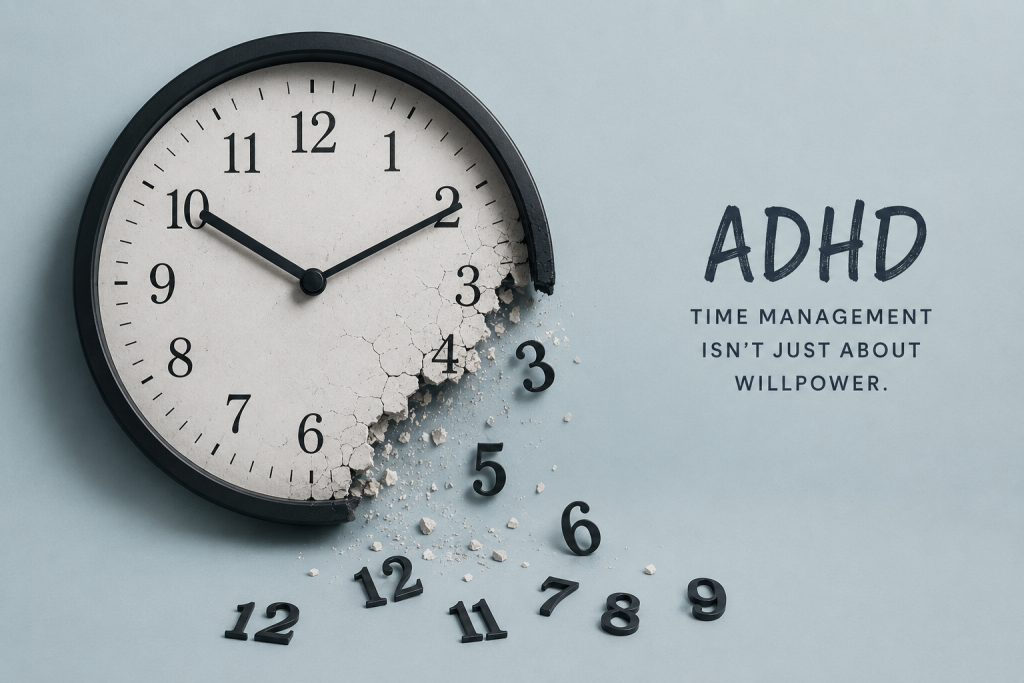
1) Time Management That Works for ADHD Brains
What we target: Time blindness, prioritizing, task switching.
How we practice: We make time visible with calendars, timers, and time-blocking; use short focus sprints; and rank tasks by effort and impact. We break “start” barriers with friction-reducing cues (open the doc, title it, write one sentence).
Try this: Book two “Focus 25” blocks on your calendar for your most important task, with a 5-minute reset in between. Add one reminder before the block (to set up) and one after (to log progress).³
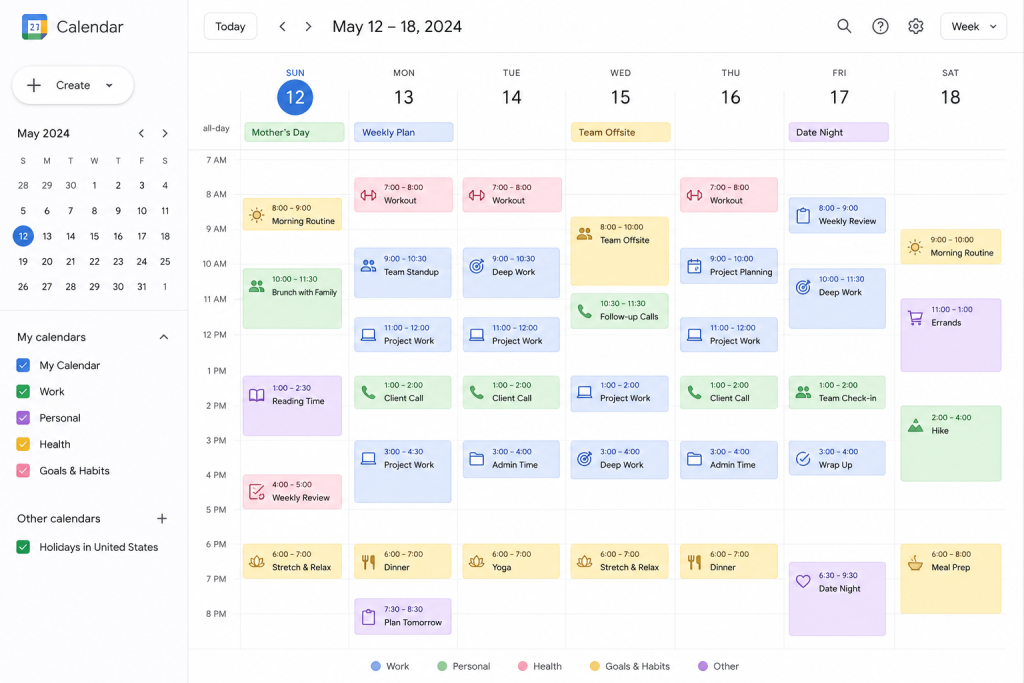
2) Organizing Without Overwhelm
What we target: Lost items, scattered systems, decision fatigue.
How we practice: We design one simple workflow per domain (work, school, home) and keep it consistent. Environmental supports matter: clear bins, labels, a “launch pad” by the door, and a weekly 15-minute reset so clutter never snowballs.
Try this: Create a “daily three” board: Today (≤3 tasks), Parking Lot (later), Done. Move cards—not your entire life—between columns.³
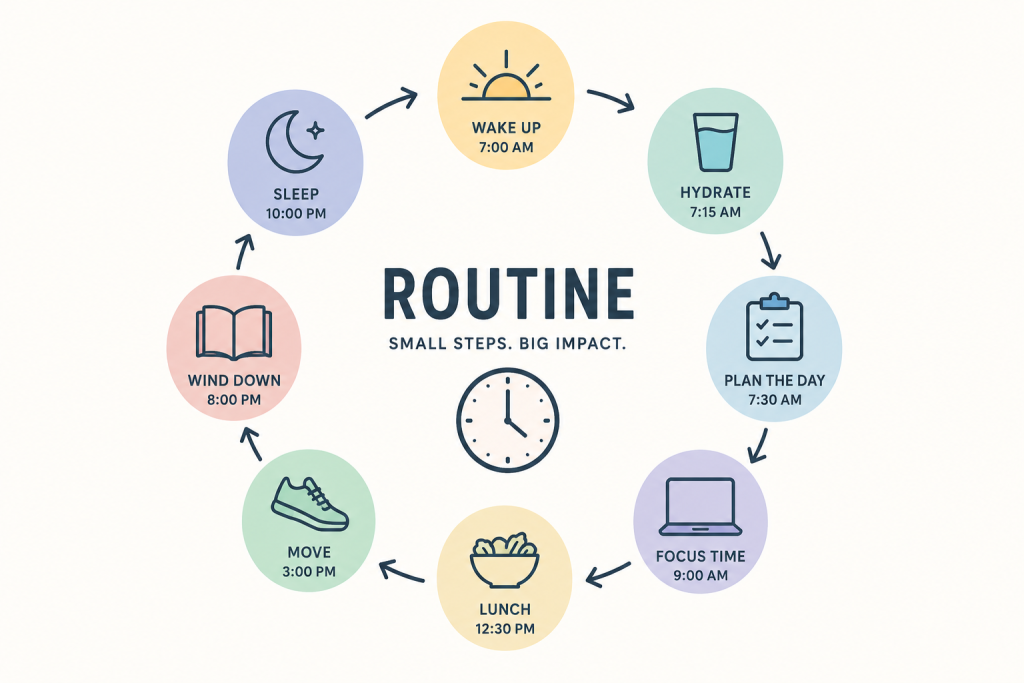
3) Routines That Actually Stick
What we target: Unstructured time, energy crashes, inconsistent habits.
How we practice: We build tiny, stacked routines that match your real day (not your ideal one): morning anchor, mid-day focus reset, evening shutdown. We pair habits with existing anchors (coffee → take meds; end of class → open planner).
Try this: Pick one routine to stabilize first (often bedtime). Set a recurring alarm 30 minutes before lights out; phone goes on a charger outside the bedroom; tomorrow’s essentials go to your launch pad.⁴
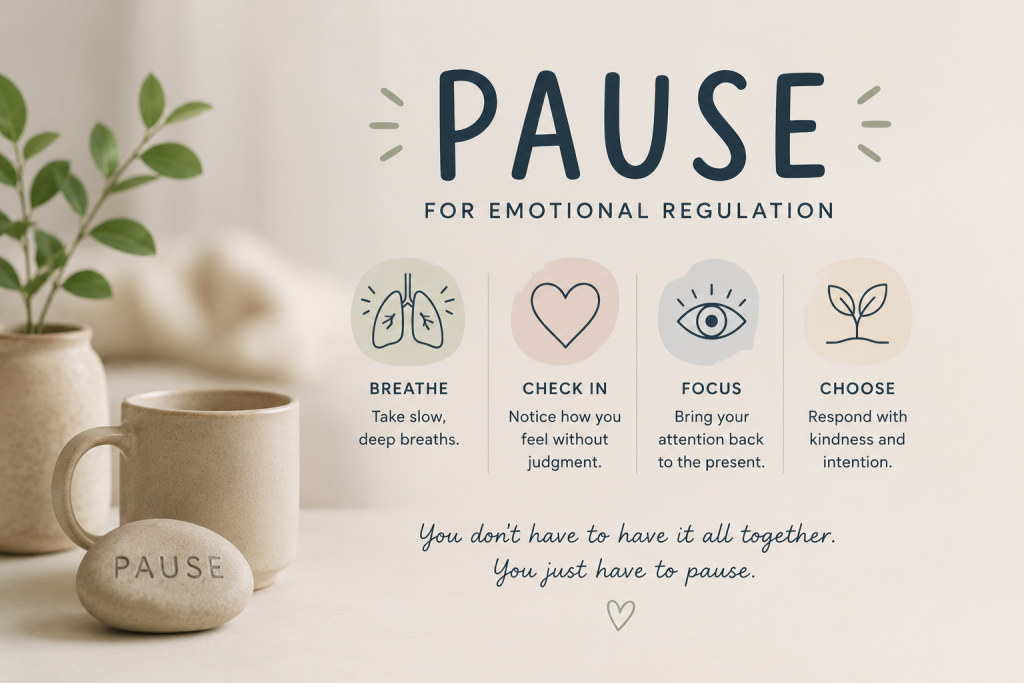
4) Emotional Regulation & Impulse Control
What we target: Fast frustration cycles, reactivity, “act now, think later.”
How we practice: We name states (“I’m at a 7/10”), insert a pause (box breathing, cold water, stand up), and use cognitive/behavioral tools to respond rather than react. When trauma is part of the picture, EMDR can help process stuck material that keeps the nervous system on high alert.⁵ ⁶ ⁷
Try this: Use the 90-second rule: when you feel a surge, breathe slowly and do nothing for 90 seconds. Most waves pass; then choose your next best action.

5) Confidence, Self-Esteem, and Mindset
What we target: “I’m lazy,” “I always mess this up,” all-or-nothing thinking.
How we practice: We reframe with ADHD education (it’s a neurodevelopmental condition, not a character flaw), track small wins, and build self-efficacy through doable reps. We also identify strengths (creativity, hyperfocus bursts) and design work around them.⁸ ⁹
Try this: Keep a 2-minute wins log for 14 days. Every night, list three tiny wins (“answered one email,” “packed meds,” “closed laptop by 10:30”). Momentum beats perfection.

6) Motivation, Follow-Through, and Accountability
What we target: Interest-based nervous system, procrastination, inconsistency.
How we practice: We pair tasks with reward and novelty, use “body doubling” (work beside someone, even on Zoom), and set up external accountability that fades as internal habits grow. We also front-load support at the start line, where many ADHD clients get stuck.¹ ³
Try this: Schedule a 30-minute virtual co-working session with a friend. Declare your micro-goal out loud. Timer on. Camera on. Report back when done.
7) Communication & Relationship Skills
What we target: Missed cues, interruptions, forgotten plans, shame spirals.
How we practice: We rehearse scripts for self-advocacy (with professors, bosses, partners), practice active listening, and design “shared systems” (calendar invites, reminder nudges) so relationships aren’t carrying invisible labor.
Try this (school/work):
“I do best with written instructions. Could you send a bulleted summary after meetings so I don’t miss anything?”
Try this (home):
“If I forget, it’s okay to nudge me once in the app we share. I’ll confirm when it’s done.”
Getting Started
If you’re an adult or college student navigating ADHD—and you’re ready to build skills and emotional resilience—therapy can help. You don’t need to fix everything at once. We’ll choose one area, design a small experiment, and build from there.
(If you’re curious which approach fits your goals, we can talk through options in a brief consult.)
References & Further Reading
- CHADD (Children and Adults with ADHD) – National nonprofit with education on symptoms, treatment, and daily living tools; overview pages on planning, organization, and support options.
https://chadd.org - ADHD Coaches Organization (for framework comparison) – Professional association describing how skill-building is structured in the coaching world (useful to see the overlap with therapy-based skills work).
https://www.adhdcoaches.org - ADDitude Magazine (expert-reviewed practical strategies) – Clinician-reviewed tips on time-management, organization, and routines for adults and students with ADHD.
https://www.additudemag.com - Barkley, R. – ADHD and the importance of structure/routines for executive functioning; accessible talks and clinician materials.
https://www.russellbarkley.org - Shaw et al., “Emotional dysregulation in ADHD” (peer-reviewed, open access) – Summarizes how ADHD relates to emotion regulation difficulties; helpful context for therapy goals.
https://www.ncbi.nlm.nih.gov/pmc/articles/PMC4282137/ - Frontiers in Psychology: Emotion regulation in adults with ADHD (peer-reviewed) – Research on reappraisal/suppression patterns in ADHD; supports regulation work in therapy.
https://www.frontiersin.org/articles/10.3389/fpsyg.2019.01092/full - Treatment guidelines & trauma-informed care – EMDR therapy information and research summaries (when trauma co-occurs with ADHD).
https://www.emdria.org - Self-esteem in adults with ADHD (systematic review, open access) – Evidence that self-esteem is commonly impacted and modifiable with targeted work.
https://www.ncbi.nlm.nih.gov/pmc/articles/PMC11016209/
Journal of Attention Disorders (self-efficacy/resources in adults with ADHD) – Research on strengths-based approaches and self-efficacy; maps to “small wins” and confidence-building.
(Example overview) https://journals.sagepub.com/home/jad